Tiedote
At Renovate Europe Day 2025 last Monday, industry leaders, policymakers, and sustainability experts gathered in Copenhagen to discuss the future of energy-efficient renovation. The Hansgrohe Group was represented by CEO Hans Jürgen Kalmbach, Fiona Félix, Head of Public Affairs, and Thomas Leth, Director Sales North and East Europe. They promoted advanced technologies for efficient hot water use in buildings — an often underestimated lever for greater energy efficiency and climate protection.
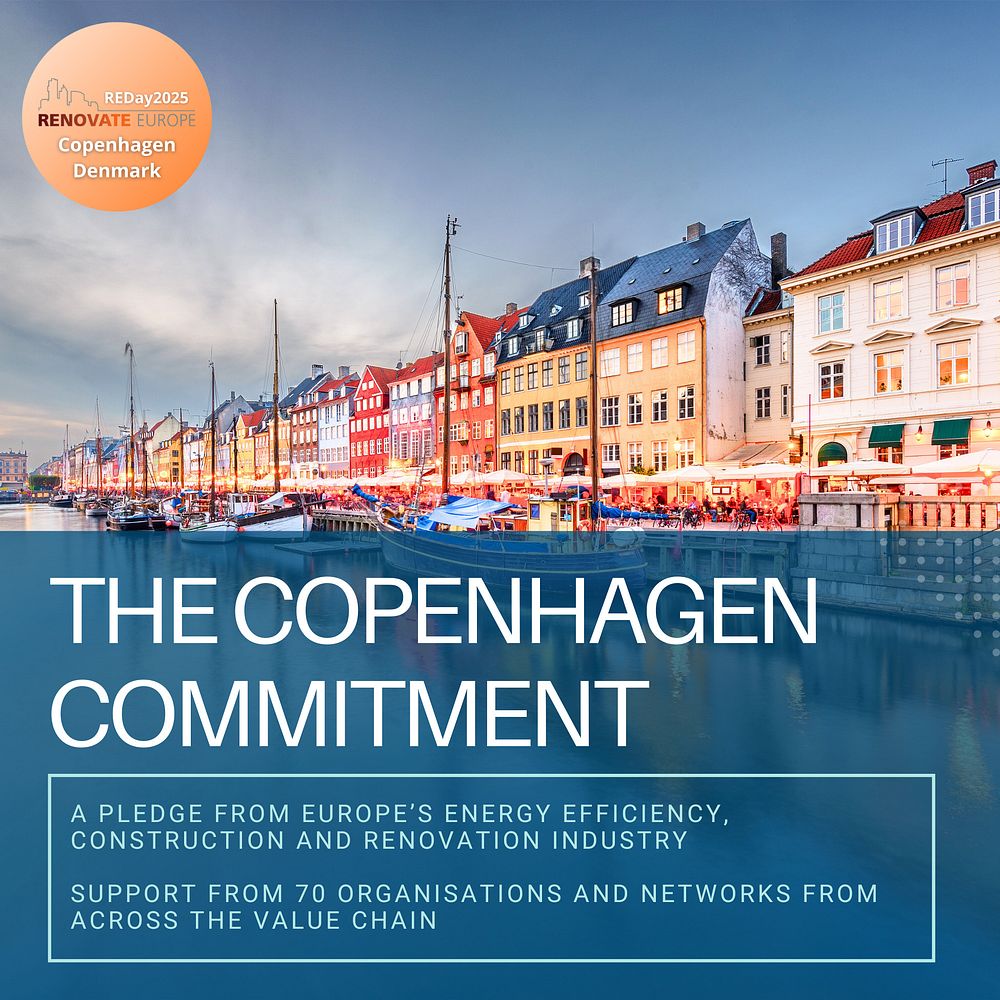
REDay is an annual conference organized by the Renovate Europe Campaign (REC) and SYNERGI that brings together leading representatives from industry, politics, and research. In addition to high-level discussions, the program also includes visits to exemplary renovation projects—with the aim of accelerating building renovation in Europe and setting new standards together. This year, EU Commissioner Dan Jørgensen and industry leaders, including representatives from Rockwool, VELUX, Knauf Insulation, Grundfos, and the Hansgrohe Group, exchanged ideas on ways to decarbonize the building sector. Together, they developed the Copenhagen Commitment, a voluntary commitment to the EU Commission for Energy and Housing.
Hans Jürgen Kalmbach clearly expressed the Hansgrohe Group’s position: ”Hansgrohe has a strong European presence and a proven track record of innovation. We expect the EU and politicians to leverage our strengths—through a harmonized single market, fewer documentation and certification requirements, and greater trust in responsible corporate decisions. Stable political and regulatory conditions are crucial for promoting investment, accelerating renovations and new construction, and strengthening the competitiveness of our companies and the purchasing power of consumers.”
 Hans Jürgen Kalmbach, CEO of Hansgrohe Group.
Water is a Key Lever to Improve Energy Efficiency of Buildings
Hot water production accounts for around 15 percent of energy consumption in buildings – a factor that is often underestimated (1). The more economical fittings and showers are with water, the lower the energy requirements and CO₂ emissions. Water-saving technologies offer a cost-effective way to significantly reduce the ecological footprint of buildings. A recent study commissioned by the German Energy Agency (dena) has shown that modern water-saving technologies can reduce household energy consumption by up to 6 percent (2).
Fiona Félix explains: ”Efficient faucets and showers should be the standard choice for every renovation or new build. That’s why we are investing heavily in converting our entire portfolio to water- and energy-saving models by 2030, from product development to marketing. If these technologies are incorporated into the energy balance of buildings, energy performance certificates, and consulting services in the future, this will create important incentives for the market. We are counting on politicians to set the right course here.”
“We are proud to stand behind the Copenhagen Commitment together with 70 industries and organizations. This initiative was launched on REDay 2025 to promote building renovation and decarbonization in Europe,” said Hans Jürgen Kalmbach. “Together, we are committed to investing in energy-efficient manufacturing and training, improving building renovation, and working across sectors to promote affordable, energy-efficient buildings.”
(1) Energy consumption in households – Statistics Explained – Eurostat
(2) Energy savings potential of water-saving showers and faucets
![]()
Læs også: